As a brand designer, I could spot an AI design from a mile away.
And, hey, I get it. It’s easy, fast, and free. Hiring a skilled freelancer or design agency costs money and takes time.
But what are you losing when you rely on ChatGPT, Claude, Gemini, or whatever your preferred AI is, to create your brand? More than you might think.
Why Logo Design Still Matters
Your logo sparks instant recognition or gets lost in the noise. In a world where potential customers make snap judgments with every click, your logo design becomes your brand’s most strategic asset. This isn’t just a graphic we’re talking about. It’s your visual handshake, the face of your business that either builds trust or sends people clicking away.
Your logo shows up everywhere your customers are. Website headers, social feeds, search results. That first visual contact drives measurable impact on how people perceive your brand. Smart businesses invest in high-quality logo design because they understand brand identity drives growth. Sure, an ai logo generator can pump out quick options, but strategic logo design reflects your business’s personality and mission in ways that actually convert.
Strong logos function as strategic business assets, not just pretty graphics. They support credibility, spark recognition, and optimize every customer touchpoint. Whether you choose a freelancer or a branding agency specializing in brand identity, development, and design like Matchstick, your logo needs to deliver results and represent your business with intention.
It’s Not Just About the Logo. It’s About How It Works Everywhere.
One of the biggest gaps with AI-generated logos is what happens after you download that file.
That AI generated logo you just had Claude make? It’s not a vector file. But, what does that mean? Let’s dive into it:
When you work with a designer worth their salt, you get a full suite of logo files built for real-world use in a variety of file formats, including high-resolution and vector exports for all branding needs:
- SVG: stays perfectly crisp at any size and is optimized for web
- PNG: high-quality image file with transparent backgrounds
- JPG: compressed image best used on solid backgrounds
- PDF: print-ready file that preserves vector quality
- AI/EPS: editable vector files used by professional designers and production vendors
It might seem like overkill, but each of these serves a purpose. If you want your logo on merchandise, menus, business cards, signage, social media, or in print, those file types matter. Using vector formats allows your logo to be resized for anything from business cards to billboards without losing quality. You can access your business’s logos in high-resolution formats such as PNG and SVG, making them suitable for both digital and print use.
AI tools usually give you one or two flat files. That’s fine until you need to actually use your logo somewhere other than a screen. If you want something that scales up, down, across platforms, and still looks professional, AI isn’t going to get you there. Many online logo makers now offer a download button that lets you download your logo in multiple file formats, including vector and high-resolution options.
The Legal Side Isn’t As Simple As You Think
AI-generated logos come with some real legal gray areas, too.
Right now, U.S. copyright law requires human authorship. That means if a logo is created entirely by AI, it may not be protected the way you think it is. In other words, you might not fully own it.
On top of that, AI branding tools are trained on massive datasets. You don’t know exactly what your logo is pulling from, which opens the door to unintentional similarities with existing brands.
That becomes a problem when you try to trademark it.
The USPTO has already made it clear that originality and clear ownership matter when applying for trademarks. If your logo looks too close to something else, or if there’s ambiguity around how it was created, you could run into issues.
And the last thing you want is to build a brand around something you can’t legally protect.
AI Designs Are Just Plain Boring
At its core, design requires a bit of mess.
It takes exploration, rough sketches, big pivots, hours spent mulling over type and colors, back and forth conversations, gut instinct and lots of context. AI skips all of that.
What you get instead is something that’s technically “good,” but often:
- on the nose
- overly literal
- lacking personality
- disconnected from your actual audience
- and very, very easy to forget
AI doesn’t understand nuance. It doesn’t understand your customers, your competitors, or the subtle feeling your brand needs to create.
It’s pulling from patterns instead of building something intentional, and that’s why so many AI-generated logos feel the same.
Real Branding Is a Process, Not a Prompt
The (human) brand creation process is so much more than typing a few sentences into the prompt box in AI logo creation tools.
At Matchstick, we walk with you through a five-stage process that’s built to create something that actually lasts and actually works.
Here’s what that looks like from your side:
Step 1: Kick-Off Meeting
We start with a conversation. We want to hear how you talk about your business, what matters to you, who you’re trying to reach, and where you’re trying to go. This discussion takes an hour, but it sets the foundation for everything that follows.
Step 2: Moodboard Creation & Review
Before we design anything, we define direction. You’ll be presented with 2–3 distinct visual directions, each with its own personality and feel. This gives you the chance to react early to what resonates, what doesn’t, and what feels right. It saves a ton of time (and frustration) later.
Step 3: Primary Logo Design
This is where your core logo comes to life. It’s the backbone of your entire brand, and we take the time to get it right. Every decision here is intentional and based on what we learned about your business, your audience, and your positioning in steps 1 and 2.
Step 4: Full Logo Suite & Brand Guide
Once your primary logo is approved, we build out the full system that includes:
- logo variations for different uses
- a cohesive color palette
- typography selections
- and a comprehensive brand guide
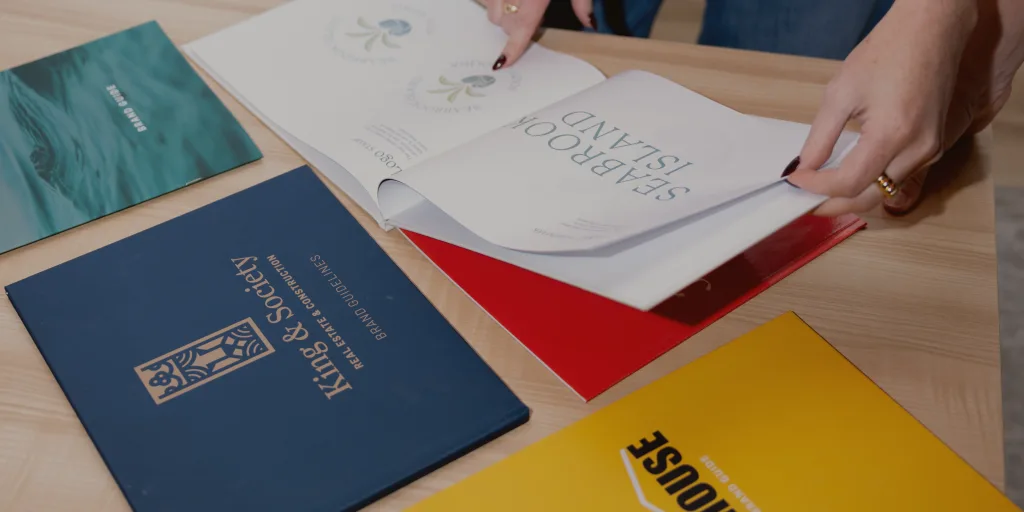
Your brand guide shows you exactly how to use everything so that your brand stays consistent no matter where it shows up. This brand kit includes your logo, color palette, fonts, and templates, ensuring consistent branding across all platforms.
Step 5: Final Review & File Delivery
Finally, we walk you through everything. You’ll receive all of your files (the right ones, in the right formats), and we’ll make sure you feel confident actually using your brand moving forward.
So, can an AI logo work?
Sometimes.
If you’re just getting started, don’t have the budget yet, and need something, those free AI tools are better than nothing.
But is it a replacement for professional branding?
Absolutely not.
A real brand is more than something that puts your company’s name into some sort of design. Branding, when done well, holds up everywhere and through the test of time, connects with the right people, and grows with your business.
And that doesn’t come from a prompt.